

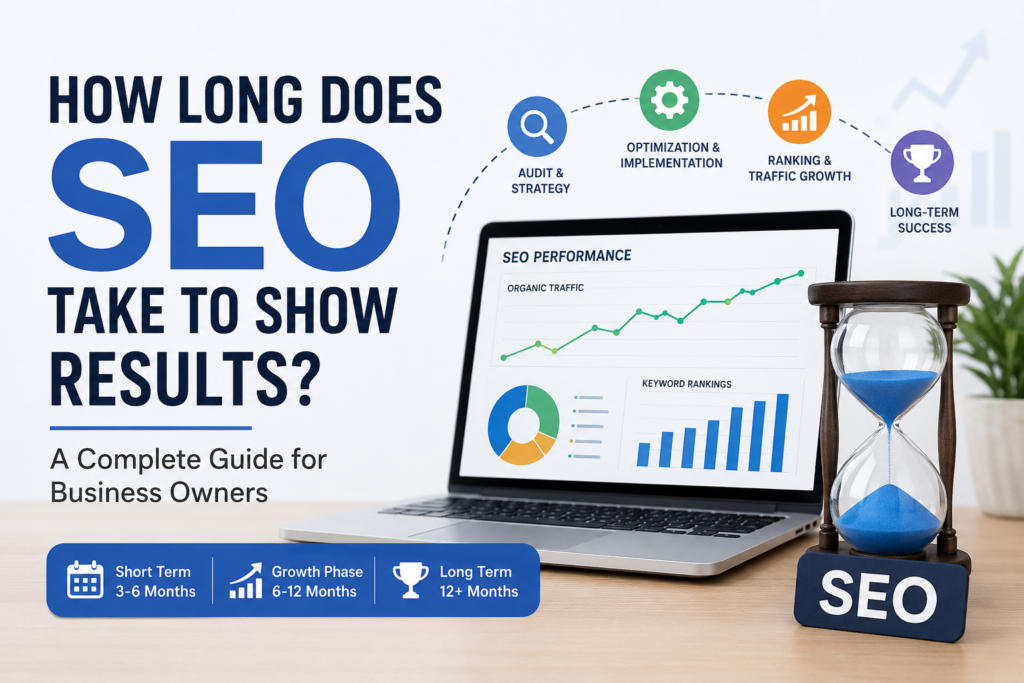
How Long Does SEO Take to Show Results? A Complete Guide for Business Owners
One of the most common questions business owners ask before investing in Search Engine Optimization (SEO) is:
“How long does SEO take to show results?”
The honest answer is that SEO is a long-term digital marketing strategy. Unlike paid advertising, where you can start receiving traffic immediately after launching a campaign, SEO requires time, consistency, and continuous optimization.
In most cases, businesses can begin seeing initial improvements within 3 to 6 months, while significant growth in rankings, traffic, and leads often takes 6 to 12 months or more, depending on competition, industry, website quality, and SEO efforts.
In this guide, we’ll explain what affects SEO timelines, what results you can expect, and how to speed up your SEO success.
Why SEO Takes Time
Search engines like Google use complex algorithms to determine which websites deserve top positions in search results.
Before ranking a website, Google evaluates several factors:
- Website quality
- Content relevance
- User experience
- Backlink profile
- Website authority
- Technical SEO health
- Content freshness
- User engagement signals
Since Google needs time to crawl, index, and evaluate changes on your website, SEO results cannot happen overnight.
Think of SEO like building a reputation. The more trust and authority your website earns, the higher it can rank.
Average SEO Timeline
Month 1: SEO Audit and Strategy Development
During the first month, SEO professionals typically:
- Analyze your website
- Conduct keyword research
- Audit technical SEO issues
- Analyze competitors
- Create an SEO roadmap
At this stage, rankings usually remain unchanged because implementation has just begun.
Activities Include:
- Website audit
- Competitor analysis
- Keyword research
- SEO strategy planning
- Technical issue identification
Month 2-3: Technical Optimization and Content Improvements
During this phase, SEO experts start implementing improvements.
Common Tasks
- Fixing website errors
- Improving site speed
- Optimizing meta titles and descriptions
- Improving internal linking
- Enhancing mobile usability
- Publishing optimized content
Expected Results
You may notice:
- Better indexing
- Improved website performance
- Small ranking improvements
- Increased keyword visibility
However, major traffic growth is still uncommon during this period.
Month 4-6: Early Ranking Growth
This is often when businesses start seeing meaningful improvements.
What Happens?
Google begins recognizing:
- Improved website quality
- Better content relevance
- Stronger keyword targeting
Expected Results
- Rankings improve for low and medium competition keywords
- Organic traffic begins increasing
- More impressions in Google Search Console
- Initial lead generation may begin
Many businesses start seeing measurable ROI around this stage.
Month 6-12: Significant SEO Growth
By now, your SEO efforts begin compounding.
Results You May Notice
- Higher rankings for competitive keywords
- Increased organic traffic
- More qualified leads
- Better conversion rates
- Stronger domain authority
Websites that consistently publish quality content often experience rapid growth during this phase.
Beyond 12 Months: Long-Term Authority Building
The most successful websites continue SEO for years.
Benefits include:
- Industry authority
- Consistent lead generation
- Lower customer acquisition costs
- Increased brand visibility
- Sustainable organic traffic growth
At this stage, SEO becomes a powerful business asset.
Factors That Affect SEO Results
1. Website Age and Authority
Older websites generally rank faster because they have already established trust with search engines.
New Websites
May take:
- 6 to 12 months for noticeable growth
Established Websites
May see improvements within:
- 3 to 6 months
2. Competition Level
The more competitive your industry, the longer SEO may take.
Low Competition Examples
- Local cleaning services
- Local tuition centers
- Small niche businesses
High Competition Examples
- Real estate
- Digital marketing
- Insurance
- Finance
- Healthcare
Highly competitive industries require stronger SEO efforts and patience.
3. Website Quality
A poorly built website slows down SEO success.
Important factors include:
- Fast loading speed
- Mobile responsiveness
- User-friendly navigation
- Secure HTTPS connection
- Proper website structure
Technical issues can significantly delay rankings.
4. Content Quality
Google rewards helpful and informative content.
Websites publishing:
- Blog posts
- Service pages
- Guides
- FAQs
- Case studies
often rank faster than websites with limited content.
5. Backlink Profile
Backlinks act as trust signals.
When reputable websites link to your content, search engines view your website as more authoritative.
Quality backlinks can dramatically improve SEO performance.
6. Local SEO Optimization
Businesses targeting local customers can often see results faster.
Examples include:
- Dentists
- Restaurants
- Salons
- Clinics
- Local service providers
Optimizing your Google Business Profile can generate visibility within a few weeks.
SEO Results Timeline by Business Type
Business Type | Initial Results | Strong Results |
Local Business | 2-4 Months | 6-8 Months |
Service Business | 3-6 Months | 6-12 Months |
E-Commerce Website | 4-8 Months | 12+ Months |
SaaS Company | 6-12 Months | 12-18 Months |
New Website | 6-12 Months | 12+ Months |
Signs Your SEO Is Working
Even before rankings improve significantly, watch for these positive indicators:
Increased Search Impressions
More people are seeing your website in search results.
Keyword Growth
Your website starts ranking for additional keywords.
Improved Click-Through Rate (CTR)
More users click on your listings.
Better User Engagement
Visitors spend more time on your website.
Increased Organic Traffic
Search engine traffic steadily grows.
More Leads and Inquiries
Higher-quality traffic generates more business opportunities.
How to Speed Up SEO Results
Although SEO requires time, you can accelerate progress by:
Publishing High-Quality Content Regularly
Create valuable content that answers user questions.
Optimizing Technical SEO
Ensure your website is:
- Fast
- Mobile-friendly
- Secure
- Easy to navigate
Building Quality Backlinks
Focus on earning links from authoritative websites.
Targeting Long-Tail Keywords
Long-tail keywords often rank faster and convert better.
Improving User Experience
A positive user experience helps improve rankings and conversions.
Updating Existing Content
Refreshing old content can improve rankings faster than creating new pages.
Common SEO Mistakes That Delay Results
Avoid these common mistakes:
- Expecting instant rankings
- Publishing thin content
- Ignoring technical SEO
- Keyword stuffing
- Buying low-quality backlinks
- Not tracking performance
- Inconsistent content publishing
These mistakes can significantly slow your SEO progress.
Frequently Asked Questions (FAQs)
Can SEO Work in 30 Days?
SEO improvements can begin within 30 days, but significant ranking and traffic growth usually takes several months.
Is SEO Faster Than Google Ads?
No. Google Ads generates immediate traffic, while SEO builds long-term organic visibility.
Why Is My SEO Taking So Long?
Common reasons include high competition, technical issues, weak content, poor backlink profiles, or inconsistent optimization efforts.
Can a New Website Rank Quickly?
Yes, especially for low-competition and local keywords, but most new websites require several months to establish authority.
Does SEO Ever Stop Working?
No. However, SEO requires ongoing maintenance because competitors continue optimizing their websites and search algorithms evolve.
Conclusion
SEO is not an overnight solution, but it remains one of the most effective long-term digital marketing investments.
Most businesses begin seeing early improvements within 3 to 6 months, while substantial traffic and lead growth often occur between 6 and 12 months. The exact timeline depends on your website’s authority, competition, content quality, technical SEO, and overall strategy.
Businesses that consistently invest in SEO, publish valuable content, and focus on user experience are the ones that achieve sustainable rankings, steady organic traffic, and long-term business growth.
If you’re looking for lasting online visibility and qualified leads, SEO is a journey worth investing in.